
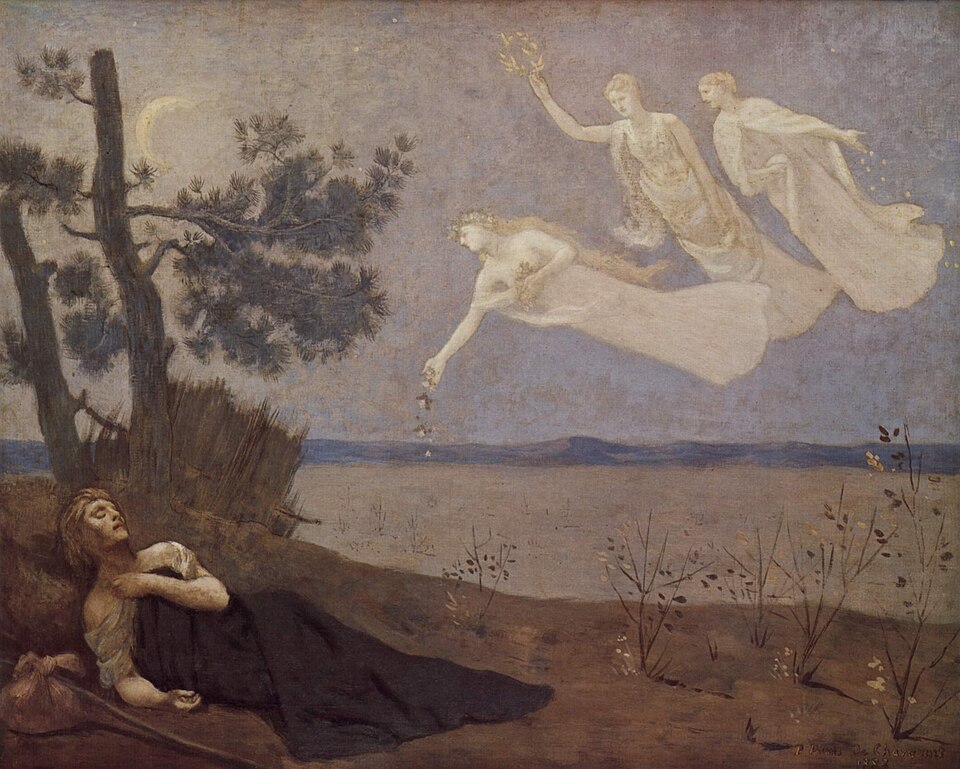
Since the beginning of time, human dreams have retained an air of mystery. They are seemingly random in their visits to human unconsciousness, and the dreamer has no control over the subjects or events of the dream, including their own actions. Often vivid and lifelike, dreams recreate real-world perceptions that include real people and events, but with elements of the dream reality disfigured by our imaginations. They can be brief, erratic, and absurdly abstract, and yet they can also hold a kind of wisdom and intuition that humans have tried to understand for thousands of years.
Ancient Babylonians would inscribe dream analyses on stone tablets. Skilled priests were educated in ancient Egypt to interpret and record dreams on papyrus scrolls. Every religious group across the world, from Hindus to Christians to Taoists, have recorded and understood dreams as messages from a god or some other higher power.
Dream analysis later gained prominence in the 19th century through the publishing of Sigmund Freud’s 1899 book, The Interpretation of Dreams. Freud argued that dreams were a form of wish fulfillment, and could reveal forbidden or “latent” desires that were masked through strange imagery or symbols in the dream, also known as the “dream-work.” Although modern-day psychology has refuted many of Freud’s claims, the idea that dreams could reveal information about a person’s psyche has had a lasting legacy in today’s research and analyses.
How do dreams occur?
Today, we understand that dreams occur during a specific part of sleep called rapid eye movement (REM) sleep. REM sleep typically happens in short bursts every 80 to 100 minutes of sleep, gradually increasing in duration as the night goes on. During REM sleep, your eyes quickly flit back and forth underneath your eyelids, your heart rate and blood pressure increases, and your muscles are temporarily paralyzed to avoid acting out any dream that might happen.
During a dream, the parts of our brain that interpret external stimuli during the day, allowing us to see, hear, smell, taste, and move is switched on. Additionally, other parts of the brain such as the hippocampus and amygdala become active, allowing us to access memory and feel strong emotions while dreaming. This is why, despite the total lack of external stimuli, dreams can feel incredibly realistic.
Why do we dream?
Although we now understand how and when dreams happen, we still don’t completely understand why dreams happen in the first place. However, many sleep researchers believe that we dream in order to process emotions and store memories from during the day. With our brain working nonstop to interpret and store information collected by our senses while awake, it can use dreams to better make sense of this information it has collected.
Interestingly, researchers have found that dreaming can actually help improve memory as well. A study from August 2018 found that when participants dreamed of a virtual maze they had completed the day before, they had better completion time and accuracy when completing the same maze again the following morning.
Another reason why the mind creates dreams might be to rehearse and solve specific real-world scenarios. So whenever you have a stressful dream before taking an important test or starting a new job, your mind is trying to practice and prepare you to adequately handle the real challenge.
How can dreams be useful in our lives?
As we’ve just discussed, dreams can be beneficial in helping us process emotions and make sense of real world challenges. But is there something to be said about the ancient belief that dreams can reveal hidden truths about our lives?
Personally, I think there may be some merit in this belief. Of course I have plenty of mundane dreams that focus on the monotonous tasks of everyday life, or dreams so bizarre they are more comical than meaningful. You probably have these dreams as well. But every now and then I have a dream that reveals something about me to myself: my hopes and desires, my greatest fears, the people and places that I care about most.
If dreams come from our thoughts, then they come from what we think about most: what’s most important to us, what we’re most afraid of, our wishes for the future, our disappointments, good memories and painful ones. And here’s one of the greatest parts about dreaming: because our subconscious is in control, we cannot avoid dreaming about realities that we wish to avoid. Everything comes to light if the subconscious wishes it so.
So many of us live our lives based on what other people want for us, and not what we want for ourselves. What if it’s possible that your dreams contain some kind of hidden wisdom, almost a kind of intuition, about yourself and what you actually want from your life, uninterrupted by external influence? What if, by studying how your dreams make you feel, you can learn more about how you can learn and grow into a better version of yourself that is more confident, stronger, and more resilient to tackle life’s challenges? If our dreams can reveal our biggest fears and insecurities as well as our biggest hopes for the future, wouldn’t it be possible to begin the best changes in our lives by listening to what our dreams say we should change?
I’ve found the best way to understand dreams is to write them down. I’ve begun to write down particularly meaningful dreams in my journal, so that I can remember them and the emotions that they caused me to feel. I try to write them as soon as I wake up so that I don’t let the details slip away from me. By recording them, it’s almost as if they are real memories that actually happened.
However, sometimes my dreams don’t feel like memories at all, but a vision of what could be. Those are the best ones, the ones that help boost my courage and motivation to continue on for another day, hoping that one day I can create a reality that is just as wonderful and splendid as any dream.
References
- https://pmc.ncbi.nlm.nih.gov/articles/PMC6338510/
- https://www.health.harvard.edu/healthy-aging-and-longevity/rem-sleep-what-is-it-why-is-it-important-and-how-can-you-get-more-of-it
- https://www.npr.org/2022/01/27/1076049850/throughline-the-history-of-understanding-our-dreams
- https://vitalrecord.tamu.edu/how-do-dreams-work/
- https://online.utpb.edu/about-us/articles/psychology/why-do-we-dream-7-common-dreams-and-their-meanings/